
Last Updated: October 7, 2026
Securing industrial wireless networks starts with retiring shared passwords. WPA2-Enterprise with 802.1x authentication gives every device its own credential, so a single compromised radio doesn’t open the whole plant floor.
At Northwest Towers, we treat this as the foundation layer, not an optional upgrade. Personal mode (WPA2-PSK) means one leaked key exposes every access point on site. Enterprise mode fixes that by routing each connection through a RADIUS server that validates identity before granting access.
The Wi-Fi Alliance’s WPA2 specification defines the encryption standard; 802.1x handles the authentication handshake. Together they deliver AES-256 encryption and mutual authentication, meaning the network verifies the device and the device verifies the network.
Three practical steps make this work in an OT environment:
Industrial wireless network segmentation is the practice of dividing your wireless infrastructure into isolated VLANs so that a breach in one zone cannot reach the others. It’s the single most effective barrier against lateral movement inside an OT environment.
The logic is simple: your SCADA traffic should never share a broadcast domain with guest Wi-Fi or contractor laptops. We separate networks into at least four zones:
VLAN tagging on your wireless access points enforces these boundaries at the access layer. A firewall between zones inspects traffic rather than trusting it.
What most guides miss is that segmentation only works if you document which devices belong where. Undocumented devices default to whatever VLAN is easiest, and that’s usually the wrong one.
A mesh radio network is a self-healing wireless topology where each node relays traffic for its neighbors, so the network stays online even when one link fails. For industrial sites, that resilience matters more than raw bandwidth.
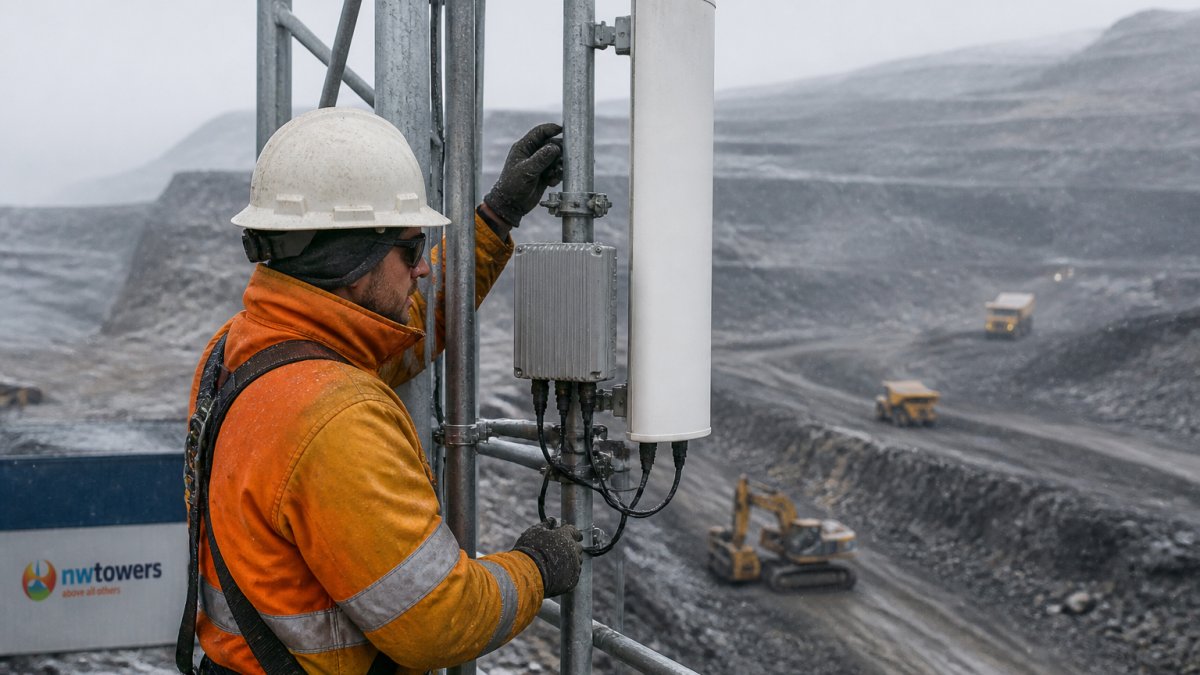
Security in a mesh network depends on mutual authentication at every hop. Each node must prove its identity before joining the mesh, and every message must be signed so a rogue node can’t inject false data.
We recommend these configuration points:
For remote sites with no fiber backhaul, a properly secured mesh is often the only option that survives both weather and interference.
Device onboarding is where most industrial networks quietly fall apart. A new sensor arrives with a default password, gets plugged in, and never gets changed.
We build onboarding into a repeatable process:
Credential management tools like GlobalSign’s managed PKI documentation automate certificate lifecycle tasks that would otherwise fall to a stretched IT team. Automation matters here because manual tracking fails the moment you onboard more than a few dozen devices.
NIST SP 800-82 is the U.S. federal guide to securing operational technology, and it remains the clearest framework for industrial wireless deployments. It covers everything from network architecture to incident response for control systems.
Why both matter. NIST SP 800-82 Revision 3 organizes OT security around the concept of zones and conduits: group assets with similar security requirements into zones, then define the conduits that carry traffic between them.
The core message is that OT security differs from IT security. Availability comes first, because a stopped production line costs more than a data breach in most industrial settings.
Key practices from the frameworks, translated to wireless:
Where Zero Trust fits. NIST SP 800-207 defines Zero Trust Architecture, and it’s increasingly being applied to OT networks.
We use NIST SP 800-82 Revision 3 as our baseline when auditing a customer’s wireless posture, and we cross-reference IEC 62443 security levels when the customer needs to demonstrate compliance to an auditor or insurer.
If you’re new to IEC 62443, start with the zones-and-conduits model from NIST SP 800-82 and then assign security levels. You don’t need to implement the full standard to benefit from its risk-based approach to segmentation.
A firewall at the network edge does nothing for traffic already inside your wireless network. Access layer security means inspecting traffic where devices actually connect.
An intrusion detection system (IDS) watches for anomalies: unexpected protocols, unusual port activity, or a device suddenly talking to an address it never contacted before. In OT environments, these signals often precede a real incident by hours.
We deploy firewalls and IDS in tandem:
The trade-off is management overhead. An IDS generates alerts, and someone has to triage them. That’s why we pair detection with managed monitoring, so operations teams aren’t left holding a dashboard they can’t act on.
Legacy infrastructure is the hardest problem in industrial wireless security, and the one generalist IT guides skip entirely. Older PLCs, RTUs, and sensors often can’t support WPA2-Enterprise, 802.1x, or certificate authentication.
You can’t rip and replace a working control system overnight. So the practical strategy is isolation plus compensating controls, not replacement.
Start with a legacy device inventory. You cannot isolate what you haven’t found. Walk the plant floor, query your wireless controller’s association logs, and reconcile against your asset register.
Then apply compensating controls based on what the device can actually do:
| Legacy limitation | Compensating control | Why it works |
|---|---|---|
| No 802.1x support | Static MAC filtering plus isolated VLAN with deny-by-default firewall rules | Limits blast radius even if the MAC is spoofed |
| Default admin credentials | Change before deployment; store in a credential vault; log the change in the asset record | Blocks trivial access and creates an audit trail |
| Unpatched firmware with known CVEs | Place behind a unidirectional gateway or data diode; restrict to internal-only traffic | Removes the device from the attack surface without touching it |
| No native encryption | Wrap traffic in an IPsec tunnel or terminate at a protocol-aware gateway | Protects data in transit without modifying the device |
| Vendor no longer supports the model | Segment into a dedicated ‘frozen’ VLAN with no route to corporate IT | Contains the device to its functional purpose |
Bridge legacy devices into a Zero Trust model. Zero Trust doesn’t require every device to be modern, it requires every device to be verified before it’s trusted.
Default settings deserve special attention. A router shipped with admin/admin is an open door, and industrial equipment is no exception.
Watch for the hidden defaults. Vendor cloud portals, SNMP community strings, and cellular APN settings are common places where defaults persist long after the device is deployed.
Legacy devices don’t need to be replaced to be secured. Isolate them, restrict their traffic, put a policy enforcement point in front of them, and treat every one as untrusted until proven otherwise.
Every layer above depends on hardware that survives the environment it’s installed in. A perfect security policy means nothing if the access point fails in a dust storm or a radio drops out near a processing plant.
Northwest Towers designs and manufactures rugged industrial wireless products for exactly these conditions. Our antennas and networking equipment are IP-rated and field-proven across mining, construction, ports, and utility sites.
We back the hardware with network engineering, integration, and managed services, including Network as a Service (NaaS). That means your team gets a secured, monitored wireless network without carrying the full operational load in-house.
Our platforms integrate with the security stack you already run, including equipment from partners like Cisco and Ceragon. You don’t have to rip out working infrastructure to harden it.
Industrial wireless networks face risks including unauthorized access through weak credentials, eavesdropping on unencrypted data transport, rogue access points, and lateral movement across flat networks. Legacy infrastructure that cannot support modern encryption compounds these threats. Many industrial environments also run default settings on devices, creating easy entry points. Without network segmentation, a compromised sensor can expose SCADA systems and industrial automation controls, making threat mitigation critical for operational technology environments.
WPA2-Enterprise replaces shared passwords with 802.1x authentication, requiring each device to present unique credentials before joining the network. This enables mutual authentication between the device and the authentication server, so rogue devices cannot impersonate legitimate endpoints. Combined with AES-256 encryption, it protects data transport across wireless access points. For industrial settings with hundreds of IoT sensors, this approach simplifies credential management and provides an audit trail of every device connection.
Industrial wireless network segmentation isolates operational technology from IT systems and separates critical control traffic from general data. If a compromised IoT device attempts lateral movement, VLANs and firewall rules contain the breach within its segment. This limits exposure to SCADA systems and industrial automation controllers. Segmentation also reduces network traffic congestion and improves latency for time-sensitive control applications, directly supporting both security barriers and performance requirements.
NIST SP 800-82 provides specific guidance for industrial control systems, covering network segmentation, access control, and continuous monitoring. It recommends defense-in-depth strategies that layer encryption, authentication, and intrusion detection across the wireless infrastructure. The framework also addresses legacy device mitigation and incident response planning. Following these guidelines helps organizations meet regulatory compliance requirements and build a stronger cybersecurity posture across their operational technology environments.
Securing a mesh radio network starts with mutual authentication using certificates or pre-shared keys unique to each node. Enable AES-256 encryption on all mesh links and disable unused management interfaces. Monitor network traffic for anomalies and deploy intrusion detection at mesh gateways. Regular firmware updates close known vulnerabilities. For remote sites, VPN tunnels add another security barrier for administrative access. Working with a provider experienced in industrial wireless deployments ensures these controls are configured correctly from day one.
Industrial wireless security isn’t a one-time project. Threats evolve, devices age, and every new sensor adds another entry point. Northwest Towers helps operations and IT teams build networks that stay secure through all of it, with rugged hardware, expert network design, and managed monitoring that catches anomalies before they become outages. Contact us to review your current wireless posture and see where the gaps are.