
Quick Summary
Autonomous mining technology improves worker safety by removing people from the places where injuries happen most, such as near haul trucks, unstable rock faces, dust, and noise. Robotic and self-operating equipment handles hauling, drilling, loading, and dozing, while operators supervise from a control room. Safety depends on layered safeguards and reliable connectivity, not on the machines alone.
Last Updated: November 7, 2026
Mining has always been one of the most dangerous jobs in the industrial world. Autonomous mining technology changes that equation by moving people away from the places where injuries happen most. This guide explains how autonomous mining technology protects workers in practice.
Autonomous mining technology is the use of robotic and self-operating equipment to perform tasks that once required a person in the cab or on the ground. Those tasks include hauling, drilling, loading, and dozing. The safety case rests on a simple idea: a machine that is not occupied by a person can be sent into conditions no worker should face.
Most of the gains come from keeping people out of harm’s way, not from making people better at dangerous work. Automation reduces exposure to falling rock, vehicle collisions, dust, and noise. It also gives operators a safer place to supervise from.
The main safety benefit is simple. Fewer workers need to stand near heavy equipment or inside unstable rock faces. That means fewer chances for a single mistake to become a serious injury.
Here is where the risk reduction shows up most:
The technology also depends on reliable communication. A haul truck that loses its connection can stop or behave unpredictable. That is why the network behind the machines matters as much as the machines themselves.
Autonomous mining equipment safety is not one feature. It is a set of layers that work together. Sensors detect obstacles, control systems decide how to respond, and supervisors can step in when needed.
Most sites combine several safeguards:
A common mistake is treating autonomous equipment as a set-and-forget system. Safety depends on how well the layers are tested and maintained over time.
Remote-controlled and robotic equipment lets an operator run a machine from a safe distance. A drill rig or dozer can be guided from a screen while the operator sits far from the work face. This removes the most dangerous part of the job from the immediate hazard zone.
The key requirement is a stable, low-latency link. If the signal drops during a critical movement, the machine needs a defined safe state, such as stopping in place.
The clearest safety win is keeping people out of hazardous areas altogether. Tasks like scaling loose rock, clearing blasted material, and inspecting unstable walls carry high injury risk when done by hand.
Automation shifts that work to machines and leaves people to supervise from a secure location. Teams that plan their site layout around this idea usually find fewer situations where a worker must enter a danger zone.
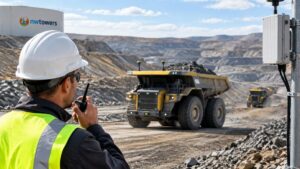
Autonomous haul trucks are often the first automation a mine adopts. They drive the same routes repeatedly, which makes them easier to program and monitor than more varied equipment.
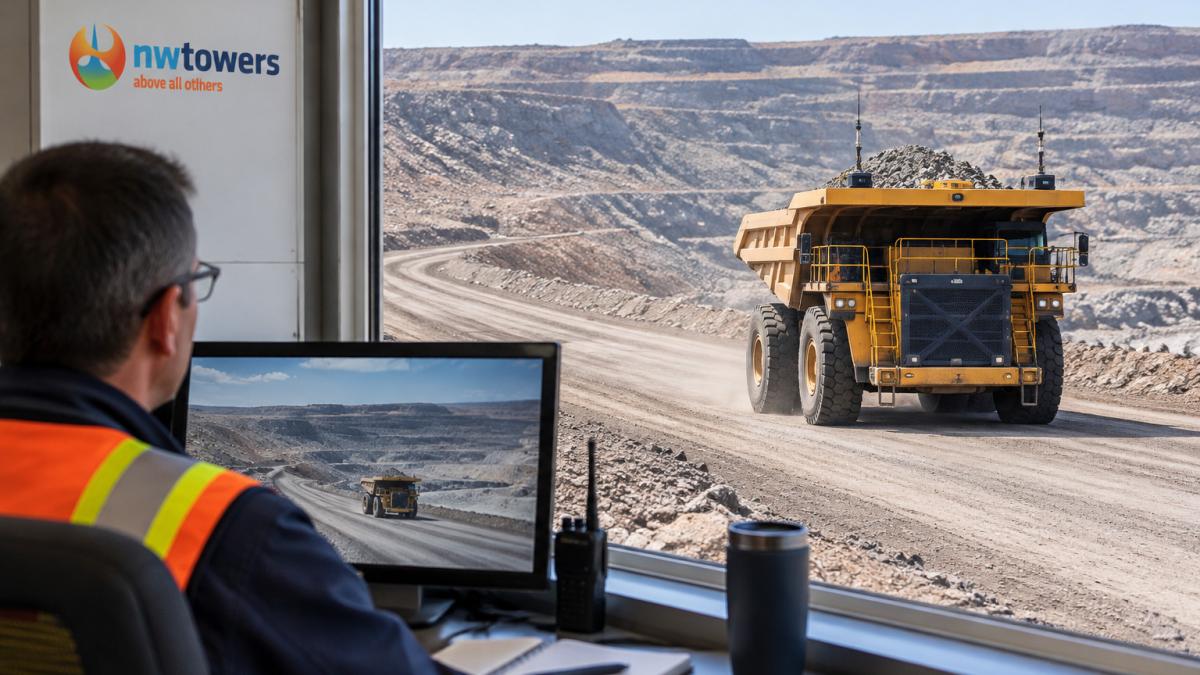
The safety value is strong. Haul trucks are among the largest vehicles on a site, and they have large blind spots. Removing the driver from the cab removes the risk of fatigue, distraction, and blind-spot accidents for that operator. Workers on foot still need clear procedures, because people and manned vehicles must share the site.
Here is what a sound haul truck safety plan usually covers:
Connected mining systems tie sensors, machines, and people together. Sensors measure things like ground movement, gas levels, equipment temperature, and worker location. That data flows to a control room in real time.
Real-time monitoring makes safety proactive instead of reactive. A rising temperature on a drive motor or an unexpected change in ground movement can trigger an alert before anything fails. Environmental monitoring also helps supervisors spot hazards that workers might not notice on their own.
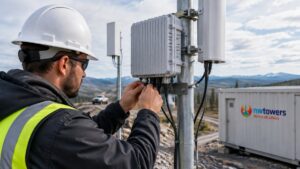
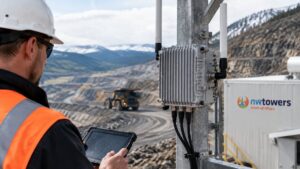
These systems only work if the network stays up. Mine sites are harsh. Dust, vibration, weather, and long distances all challenge wireless links. Rugged antennas and networking hardware, designed for these conditions, help keep sensor data and machine commands flowing where the work happens. MSHA guidance on mine safety technology
Here is what a connected monitoring setup should provide:
Technology alone does not make a site safer. Workers need training that explains how autonomous systems behave, where the safe zones are, and what to do when something goes wrong.
A practical training program usually includes classroom sessions on how the system works and its limits, field walkthroughs of safe zones and emergency stops, refresher drills on what to do during a system alert, and feedback channels so workers can report concerns. Familiarity with these tools also helps workers understand how remote video surveillance can support situational awareness around active equipment without replacing safe-zone procedures or direct communication.
Change management matters just as much. Some workers worry that automation will cost them their jobs; others trust the machines too much. Both attitudes create risk. Clear communication, honest answers about job changes, and hands-on training help build the trust a safe site depends on. Involving safety representatives or union delegates early in the rollout gives workers a formal channel for concerns and makes it more likely that procedural gaps are caught before they become incidents.
Watch out: treating training as a one-time event is a common failure. As routes change, software updates, and new equipment arrives, refresher training should be scheduled and documented, not left to informal on-the-job learning.
Role changes deserve explicit planning. Operators who move from the cab to the control room need training in remote supervision, alarm response, and the limits of what they can see on screen. Workers who remain on foot near autonomous routes need clear separation procedures and the authority to stop operations when they see a hazard. Documenting these roles and responsibilities in the site safety plan turns good intentions into enforceable practice.
For teams building the connectivity that supports control-room supervision and remote operations, Rugged Antennas for Autonomous Mining is a useful place to see the hardware that keeps these systems linked, and our Mining – Northwest Towers solutions cover coverage planning for open-pit environments.
Every autonomous system has failure modes, and safety planning must name them in advance.
Fallback procedures should be simple, documented, and rehearsed. When a haul truck loses its connection, the standard behavior is to stop safely in place and alert the control room; the machine should not attempt to continue or return to a depot unless the route is pre-approved for autonomous return. When a sensor goes silent, the area should be treated as occupied until a worker verifies it is clear.
Watch out: a common mistake is to test fallback procedures only in ideal conditions. Dust, vibration, and degraded network links change how a machine behaves, so drills should include simulated communication loss and sensor blockage under realistic site conditions.
Measuring safety results is just as important as designing the controls. A practical measurement framework uses both leading and lagging indicators. Leading indicators include exposure hours in hazardous zones, near-miss reports involving autonomous and manned equipment, the number of fallback events triggered per month, and the time from alert to human response. Lagging indicators include recordable incident rates, collision events, and equipment damage incidents. Tracking these together shows whether automation is actually reducing risk or simply shifting it.
A common pattern is to review fallback events weekly and near misses monthly, looking for clusters that point to a specific sensor, route, or procedure that needs adjustment. Managed network monitoring and support can help keep the connectivity behind these measurements reliable, which is why many sites use Expert Network Monitoring and Support at Northwest Towers to catch network issues before they affect operations.
The table below summarises the common autonomous mining failure modes and the fallback responses the article describes.
| Failure mode | Cause | Fallback |
|---|---|---|
| Perception failure | Dust, rain or low light affecting sensors | Stop and alert control room |
| Communication failure | Loss of link to control room | Stop safely in place |
| Localization failure | Machine loses its position fix | Halt and await remote intervention |
| Software or update failure | Unexpected behavior after patch or configuration change | Halt and verify before resuming |
| Silent sensor | Sensor stops reporting | Treat area as occupied until verified clear |
Upgrading connectivity is often the most important step in an autonomous mining rollout. Start with a site survey that maps coverage gaps, dead zones, and areas with heavy equipment traffic. Then plan the network around the routes and work faces where automation will operate.
Consider these questions before you commit to a design:
Many sites benefit from a phased approach. Begin with one haul route or one drill area, prove the safety and reliability gains, and then expand. For teams planning industrial wireless coverage for harsh sites, Rugged Antennas for Autonomous Mining is a useful place to see the hardware that supports these systems, and our Mining – Northwest Towers solutions cover coverage planning for open-pit environments.
Safer mining is not a single purchase. It is a set of connected decisions about equipment, people, training, and networks. When those pieces work together, workers spend less time in danger and more time in control rooms where they can see and respond to risk.
Autonomous mining technology moves people away from tasks that expose them to collisions, falls, dust, and unstable ground. Autonomous haul trucks, remote-controlled dozers, and robotic drills can run in areas where workers would otherwise operate equipment directly. Operators then supervise from a safer location using real-time data from connected sensors. The safety gain depends on reliable connectivity, clear collision-prevention rules, and training so that workers understand how the system behaves around them.
The main risks include false activations, loss of connectivity, sensor blind spots, and unclear behavior when people and machines share the same space. Failure modes need planned fallback procedures, such as stopping equipment safely when a signal drops or a sensor reports a fault. Mines should also control cybersecurity and access to remote control systems, since a compromised network can affect operating equipment directly.
Preparation starts with consultation, so workers understand what will change and why. Training should cover how autonomous equipment moves, how to recognize warning signals, and how to follow exclusion zones and stop procedures. Operators moving into remote roles need practice with the control interface before live operation. Regular drills and feedback sessions help teams trust the system and report problems early.