
Last Updated: October 1, 2026
The cost of industrial network security upgrades is best understood as an investment in uptime, not a line-item expense.
This guide breaks down what actually drives industrial network security spending, what a breach really costs you, and how to plan a phased rollout that spreads the investment across budget cycles. Below, we’ll show you how to build a defensible business case instead of arguing about hardware prices.
What drives the price of an upgrade comes down to four variables: the age and diversity of your installed equipment, how segmented your operational technology (OT) network already is, whether you’re retrofitting legacy systems or building greenfield, and how much of the work you outsource. A facility running modern managed switches across a segmented network will spend far less than a plant still routing production traffic through unmanaged hardware that predates the automation it supports.
The uncomfortable truth is that the cheapest quote rarely reflects the real cost. Vendors quoting low often exclude integration labor, spares, and the downtime window required to cut over. Those exclusions surface later as change orders.
The cost of ransomware in manufacturing is not the ransom itself. It’s the production halt, the recovery labor, and the customer penalties that follow. Ransomware gangs target industrial operators precisely because downtime hurts more than any payment, and because operational technology (OT) environments often cannot be patched or rebuilt on the same timeline as an IT network.
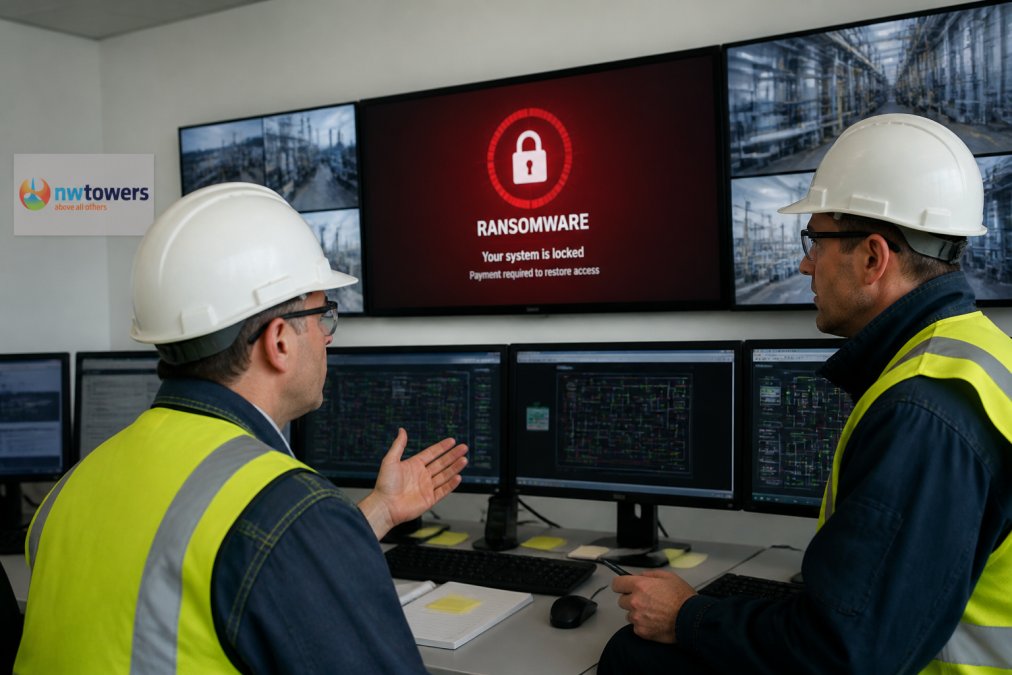
Breach costs break into four buckets. Budgeting for only one of them is why incident estimates routinely come in low:
Data loss compounds all four. Corrupted process data can force a facility to re-validate quality records before resuming shipments, and a compromised historian can mean weeks of production history is untrustworthy. That is a cost that never appears on an incident report but shows up in audit findings and customer escalations.
Downtime carries the heaviest weight. A useful way to frame it: take your facility’s hourly throughput value, multiply by the expected hours of a full control-system outage, then add idle labor and any contractual penalties. A single day of unplanned OT downtime can exceed the entire capital cost of the segmentation and access-control project that would have prevented it. That comparison, not the hardware quote, is what makes a security upgrade fundable.
Industrial operators also carry obligations that pure IT environments do not. Under the Cyber Incident Reporting for Critical Infrastructure Act (CIRCIA), covered critical-infrastructure entities face mandatory incident reporting timelines to the Cybersecurity and Infrastructure Security Agency (CISA). The Environmental Protection Agency’s America’s Water Infrastructure Act (AWIA) requires risk and resilience assessments and emergency response plans for community water systems above a size threshold. For chemical facilities, the Chemical Facility Anti-Terrorism Standards (CFATS) program imposes similar planning and reporting duties. None of these are optional, and none of them are cheap to satisfy retroactively after an incident.
The cost of not maintaining a secure network environment is therefore not a one-time hit. It’s a recurring risk that grows as legacy systems age and threat actors refine their methods against industrial targets. The practical takeaway: budget for the breach you are trying to avoid, not just the upgrade you are trying to buy. If you want to see how a managed platform reduces that exposure, review our managed network and security services.
A workable budgeting framework starts with a current-state audit, not a vendor quote. You cannot price what you haven’t inventoried.
Legacy retrofitting is where budgets quietly break. Old controllers often lack native encryption, so securing them means adding gateways or segmentation hardware rather than replacing the controller itself. That’s usually cheaper than a full rip-and-replace, but it introduces integration labor and testing time that never appear in a hardware quote.
Hidden expenses to budget for explicitly:
Replacing VPNs with zero-trust architecture removes the single biggest weakness in most industrial remote-access setups: the VPN tunnel itself. A VPN grants broad network access once a user authenticates, which means one compromised credential can expose everything behind the tunnel.
Zero-trust access inverts that model. Every request is verified, and access is granted per application rather than per network. Even a compromised system sitting inside the company network cannot reach critical platforms without explicit, per-application authorization. That eliminates the lateral movement attackers rely on after an initial foothold.
For industrial operators, this is the practical difference between “we have a firewall” and “we have contained the blast radius.” Zentry, the managed security platform offered by Northwest Towers, applies this zero-trust model to industrial environments, so access to a control system is granted only to the specific user and application that need it, not to an entire subnet.
Managed security services for industrial networks lower total cost of ownership by converting unpredictable capital and staffing costs into a predictable operating expense. Instead of hiring and retaining OT security specialists, you subscribe to a team that already monitors, patches, and responds.
Phased upgrade roadmaps spread industrial network security costs across multiple budget cycles instead of forcing one large approval. You secure the highest-risk zones first, prove the model works, then expand.
A practical three-phase structure looks like this:
| Phase | Focus | Typical Duration | Primary Cost Driver |
|---|---|---|---|
| Phase 1 | Asset inventory and segmentation of critical zones | 1-2 quarters | Audit labor and gateway hardware |
| Phase 2 | Zero-trust remote access and monitoring rollout | 2-3 quarters | Platform subscription and integration |
| Phase 3 | Legacy retrofits and full network hardening | 2-4 quarters | Retrofitting hardware and cutover downtime |
The hardest part of an industrial security upgrade isn’t the technology. It’s proving that the cost of inaction outweighs the cost of the project, and doing it before an incident forces the conversation.
The financial impact of an industrial network data breach extends far beyond any ransom payment. It includes costs for incident response, legal fees, regulatory fines, and lost business. The most significant expense is often operational downtime, which can halt production for days or weeks. For industrial operations, the cost of downtime, data loss, and system recovery can easily reach millions of dollars, making proactive security upgrades a critical investment.
Traditional VPNs grant broad network access once a user is authenticated, creating a large attack surface. If credentials are compromised, an attacker can move laterally across the network. Replacing VPNs with zero-trust architecture eliminates this risk. Zero-trust verifies every access request and grants permission on a per-application basis, not network-wide. Even if a system is compromised, it cannot access critical platforms without explicit authorization, effectively shrinking the attack surface.
Legacy industrial equipment often runs on outdated operating systems that no longer receive security patches, making them vulnerable to known exploits. Many of these systems were not designed for modern networks and lack basic security features. Connecting them to a corporate network creates a significant vulnerability. Securing them requires network segmentation, virtual patching, or a phased replacement plan, all of which are important line items in the cost of industrial network security upgrades.
Managed security services for industrial networks provide access to 24/7 monitoring, advanced threat detection tools, and a team of experts without the overhead of hiring and training internal staff. This model shifts security from a capital expense to a predictable operational expense. It also ensures continuous protection and proactive risk mitigation, which is often more effective than an in-house team stretched thin across multiple responsibilities.